Affichage des articles dont le libellé est comments. Afficher tous les articles

dimanche 22 octobre 2017

Transparency real and imagined

from the all very well in theory department

Back in August I came across this blogpost—a somewhat generic homily on the importance of openness and transparency in scientific communication. I share the author's optimism that open access to the scientific literature will provide better validation of published work than traditional systems of peer review. But unless this superior access is actually exploited by knowledgeable users, the potential gains may not be realized. Though a blinking cursor beckoned me below the line, the author has, in his or her wisdom, failed to publish my comment. So it must appear here:
Transparency is superior to trust—as long as some relevant person(s) actually exploit(s) the transparency. Look at how long that ssl flaw hung about in Debian, for example: https://pinboard.in/u:juliusbeezer/t:security/t:opensource/
That was all open code, utterly vital to the security of hordes of crucial servers run by the world's top-most geeks, and therefore, every internet user. But the problem sat there for two years, apparently.
That's an extreme example that did get fixed. Transparency is necessary yes, but unless it's actually backed by readers/critics/reviewers/coders/experts actually looking through the windowpane afforded by it, its value is only rhetorical.
It does mean that the guards can guard the guards and we can watch the guards guarding the guards though. Or maybe McGregor-Maywether.

lundi 22 août 2016

Lamentable Corbyn-basher refuses debate

I felt moved to offer a comment below this blogpost, which claims Jeremy Corbyn is "unelectable" because of his positions he has struck in the past on matters Irish:

Classifying Corbyn's statement that he would commemorate all those who have died in the cause of Irish independence as "support for the IRA": just a tad crude? Would there have been a Good Friday agreement without the left's recognition of the justice of the republican movement?
Of course, that doesn't stop anyone misrepresenting Corbyn's views in the way that you suggest. But it would still be a misrepresentation. The English electorate may well be ignorant enough to find such over-simplification attractive; but that is hardly a recommendation. Fortunately the electorate has other sources of information than admen's billboards these days.
Neither would participating in a "minute of silence" (however convened) be equated with endorsement in most reasonable people's minds: politicians should pause for reflection more often!
I'm posting it here under the rule that it is rejected comments that are most interesting (the site, a standard WordPress design, is purportedly open to comments, but only one suspiciously unctuous comment has actually made it to below the line. Ho hum!). 

Update 28/11/16: Nice example of how anyone can get caught up in a minute of silence.

mercredi 13 janvier 2016

Rearranging the urban furniture

from the because-we-need-the-space-for-other-things department
The Bristol Traffic blog, which claims to be about "getting around Bristol", obviously got off on the wrong foot when it was named "bristolcars", so I suppose it was hardly surprising that it failed to publish this comment, beneath a post there regretting "the war on the motorist." They are, of course, under no obligation to publish any remark of mine, though their unwillingness to debate their ideas is duly noted. As ever, I offer it here instead:

"The car is a victim of its own success. Car ownership over the last twenty-five years has continued to increase linearly—see this RAC report for example on: Car ownership in Great Britain According to the RAC, there were 20 million cars on Britain's roads in 1991; by 2007 there were 26 million, with considerable growth in two- and three-car households. Whilst these might at first sight be considered figures in support of your argument for more parking and roads, the problem in town is that space is limited and choices have to be made. If every trip into the centre of town were to be made by car, congestion would rise. Consider the graphic attached to this tweet
which illustrates the amount of road space needed by 48 people using various transport modes: a car, the bus, walking, or a bike. It is clear that cars occupy a vast amount of urban space—and the faster they move, the more they need. This high requirement for space is to the detriment of all other modes, and choices have to be made. Presenting this as a war on the motorist is to fail to understand the impossible demands of the mode for urban space in any streetscape conceived before the 20th century. A streetscape designed for the car looks like Los Angeles, not Bristol, and if you want a city like Bristol to work for everybody, car use has got to be limited in some way."

mercredi 11 novembre 2015

Is cycle infrastructure the new helment?

from the new-Fordist-distractions department


The open access arm of the BMJ has just published the results of an ecological study from Canada, where legislators have created an interesting natural experiment by requiring cyclists to wear helmets in some provinces, but not others. The authors claim surprise that they found no effect in either the overall injury rate or the head injury rate between the provinces, though those of us who have followed what BikeSnobNYC calls the helment (non-)issue are perhaps less surprised. Forced by their negative results to admit helmet legislation has no effect on the substantive issue--reducing danger for cyclists--the authors then proceed to claim that "more cycle infrastructure" is the solution. Although they review the literature, they themselves have no data to add, and as the issue of road design and behaviour is fraught with complication, conflicting interests, and perverse effects, I thought they weren't entitled to a free pass at their sweeping and not altogether well-founded discussion.
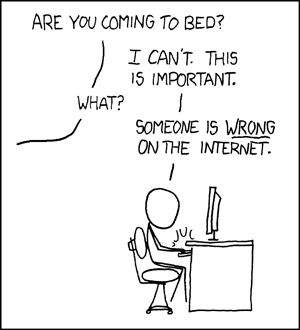
As ever when someone is wrong on the internet, I freely composed a comment for the delectation of both the authors and the public. This the BMJ have failed to publish, so, in the best traditions of this blog, it appears here:
These are valuable results and the authors are to be congratulated on their clear presentation.
Given the health and well-being effects of regular cycling, the overall risk of hospitalisation of 622/100 million trips is worthy of wide attention: a chance of ~1 in 160,000 that your trip will end in hospital rather than your intended destination is really rather low, even in the present motor-dominated environment.
However, the recommendation by the authors that more "bicycling infrastructure" is the answer to increasing modal share, thereby augmenting the "safety in numbers" effect is controversial, and is neither justified nor refuted by the evidence presented here. (Cyclists were asked about whether they used their bicycles, not about the routes they took).
My own view is that developed countries already have a highly developed infrastructure that is ideal for cycling called the roads, and that the real problem is negligent driving. Some design features that privilege more direct routes for cyclists and exclude excessive motor traffic (cycle contraflows, modal filters, bicycle boulevards) may be useful, but the real enemies remain excessive speed and drunk driving, and the newer menace of distraction by mobile devices.
Effective measures to reduce these, including stricter policing, driver education, strict civil liability for drivers who collide with cyclists, and proper accident investigation to ensure lessons are learnt, are more important elements for those who would emulate (and surpass) best European practice.
I shall footnote this comment with two more:
1) I am surprised and disappointed at the BMJ's failure to publish the comment in situ, though I suspect this reflects organisational failure to monitor the relevant disqus account rather than any conspiracy to silence me.
2) I suppose it is not surprising that people deluded into a focus on the victim-blaming issue that is cycle helmet promotion and compulsion, will, brought to their senses by the lack of supporting data, switch their allegiance to the unicorn of "cycle infrastructure," instead of the elephant in the room of much-needed motor traffic reduction, better driving-related laws, enforcement thereof, and driver education. These present real challenges of course: but addressing them is what's needed, not demands for a parallel reality of "cycle infrastructure" before cycling can be widely adopted.
And given that such infrastructure is often second-rate while delegitimizing existing cyclists' right to the road, they may be assured that this cyclist at least, will keep calling them out, until his dying breath has been finally drawn.

lundi 5 octobre 2015

Separate development? Or civilised behaviour?


I recently commented on a Guardian article discussing recent deliberate attacks on cyclists in the UK, which uncritically presented the statement:
building segregated bike lanes [is] proven to be the best way to prevent such deaths
 I reproduce it here, for ease of navigation:

***
Reference required? It is rather a controversial matter. It is true that the countries where extensive segregation of cyclists has long been practised (Denmark, the Netherlands) have markedly better safety records than their neighbours. They are no paradise though: there are still 200 cyclist deaths a year in the Netherlands, for example.
But their segregated networks have been obtained at a certain price: the exclusion of cyclists from many parts of the road network (and its superior surfaces and direct travel lines), and slow and complicated junctions.
A Canadian study has showed higher accident rates for cyclists who habitually use footpaths rather than the carriageway. Most collisions happen at junctions. Footpath (and cycle lane) users generally find themselves at a positional disadvantage with respect to the traffic flow just when they most need to be correctly positioned.
A pre-eminent Dutch road safety expert has just published a paper (paywall, sorry) admitting that, in part, his country's superior cycling safety record is because their cyclists ride more slowly. They have to, on often tight cycle paths. Waits at complicated junctions can be long too.
Building cycle paths does reduce the space available for other modes. Such paths are the cowardly choice of the policymaker too timid to confront head-on the reality that the private motor vehicle is a dysfunctional form of urban transport, but nevertheless would, understandably, appreciate less noise, pollution, danger and fewer parking spaces in their town centre.
It has little to do with increased road safety for cyclists though: in fact, life for the cyclist may well be more difficult after they have been implemented, though if this also means fewer motor vehicles in town, this may be nicer for everyone.

***
Here's a video from the UK of the kind of angry entitlement we can expect from motorists once a cycle path, however unsatisfactory, has been built alongside a main road. Talk about realpolitik! (Cyclists in the UK retain their right to ride on the road, and are not obliged to use any cycle path.)

***

Thanks to the authors of these tweets for inspiring this post:

lundi 20 juillet 2015

A brief note on street "closures"

from the opened-for-other-uses department

Using my mother's Mac for a couple of days, and I just rediscovered this comment that I wrote last summer. A Sheffield cyclist had posted a nicely illustrated blogpost of human powered traffic on the streets immediately after the Tour passed there last summer, and was asking for more of it. 

>At least two callers [to a local radiostation phone-in] have suggested that we need to close the roads more often

As you have so vividly illustrated, when we close roads to motor traffic we *open* them to other more convivial uses such as chatting to the neighbours, evanescent art projects, walking, cycling, and even bicycle racing.

This point may seem pedantic, but if, as a cycle campaigner, you fall in with the dismal motor paradigm that does not even admit of a choice in the matter of use of public space, then you are already losing before you begin. Reclaim the roads!

Please note also that there is a large and influential lobby of businesses connected with the provisionment of motor traffic in all its glory--motor vehicle manufacturers, oil multinationals, civil engineering firms etc etc--that would be extremely threatened by the widespread adoption of cycling. As the clamour against road deaths rises, second line measures such as exporting all cyclists to a imagined parallel universe of cycle infrastructure offer false promise of reduction in danger for cyclists. In fact, junctions--the principal source of collision risk for the cyclist--become more complicated, and are arguably, in the absence of modifications in driver behaviour, more dangerous.

The policy of separating cyclists from other traffic also has the highly desirable effect--for the motor lobby--of delegitimising cyclists who ignore inferior infrastructure and continue to ride on the road.


These points may seem to be slightly pedantic, but to paraphrase Richard Stallman, please don't ever embody in your words the assumption that the only traffic is motor traffic, because if you presuppose that reclaiming the roads for other uses is impossible, and that's embedded in your way of speaking, then you'll be working very much against that. And the big picture third paragraph attacking big business is a classic Beezer tactic: just hoping to change one person's mind, just once, at a moment when they might just be ready to. And that is why I write comments, even if they are considered the lowest form of internet literary life.

mercredi 6 mai 2015

On the ignorance of moral philosophers

 Over the years my online reading has expanded to encompass several philosophical blogs. Of course we all love (phil) knowledge (sophy). So I suppose by a philosophical blog I mean a blog written by someone formally engaged in the activity promulgated by university philosophy departments.
Now in the course of this, I've started to note a pattern in philosophical discourse, in which the author feels free to devise some fairly simplistic example,* and then uses it to reason towards some questioning of a universal value. Here is a recent example, written by Richard Chappell, a philosopher interested in morality at the University of York. In it, he questions the idea that people are equally worthy of moral consideration by inviting us to consider our actions faced with Gandhi and Hitler (as personifications of good and evil presumably) and a single dose of a painkilling drug. I didn't like this, and submitted the following comment:

1) Who was responsible for stock control of the analgesic drugs? Poor job. Most well-established analgesics are cheap. Even with more resource-intensive treatments, there are usually ample rational criteria for selecting patients in whom the treatment would be most beneficial, other than their wealth or putative moral status.
2) The safest, most practical, and most moral course of action is to treat everyone, Hitler, Gandhi (who was no saint), Gilles de Rais, whoever, with as much professional élan as you can muster. In the British Army Medical Corps, for example, there is a certain ethical pride in treating all casualties optimally, whether friend or foe. It's called respect for the Geneva Convention. Would you like to rescind it? And more generally, to do otherwise, in the healthcare domain, is potentially an assault on the patient's right to life. Or perhaps you're planning to do away with human rights as well?
3) In a world in which even professors of moral philosophy question the moral equality of every human being, it is particularly important to be known for trying to treat everyone as well as possible, should you yourself need treatment one day. Imagine a judgmental doctor who considered moral philosophers worthless blowhards and treated them less favourably in some way. That would be awful.

Of course, M. Chappell has no obligation to publish any remark of mine, though I note that he has posted ten other comments, all more cosy to his way of thinking. Setting this comment up has proved somewhat tedious, but I post it here anyway on the general principle that such rejected comments are the most important ones to publish. And Chappell's ideas must be classed in that flora of delicate organisms which survive only under laboratory-controlled conditions, with little, if any, relevance to contemporary problems.

===
*Stevan Harnad posted a particularly objectionable example of the genre on his Google+ profile recently, inviting the following "thought experiment":
"You are a driver of a runaway train hurtling towards a set of points. You have a switch that can send the train one way or another, but you can't stop. On one track your child has been tied to the rails. On another, someone else's child. What do you do?"
This was presumably designed to evoke contemplation of justice and family values, but my first reaction was: "Well, who's going around tying children to railway lines?" and "err, given the supposèd urgency of the situation, how come you've got this perfect information on the identities of the children ahead?"
But such refusal to join in the philosophical game I fear makes me an unsuitable playmate in this playground.
I dislike all this for the useless waste of time and energy it represents. It is misguided. There is no shortage of real world ethical and moral problems. Why not use your talents and energy to discover and describe real things that have actually happened, then reason about them?
===
Update 28/1/19 The trolley problem is everywhere. I suspect people are finding it a useful pre-packaged discourse on the problems of self-driving cars. I doubt if it's the most effective way into consideration of road danger reduction issues. Still, cars that respect all road traffic rules? Bring 'em on.
I particularly liked this quote, by an engineer working at X, Google's autonomous vehicle division: "the answer is almost always ‘slam on the brakes'". To which one might add: "Don't go too fast in the first place."

dimanche 25 janvier 2015

One annotation site to rule them all?

from the my-kinda-people department

I did not know that Marc Andreeson, programmer of the first graphical web browser, NCSA Mosaic, had originally included a built-in commenting feature, but rapidly disabled it when the resource implications of hosting the entire web's remarks about the entire web's content sank in (!) Fair enough. But the reason why commenting is a personal itch for me is because this is the bit of the web that so obviously represents a novel departure from traditional publishing processes. A web "page"? Meh, 2000 years off the pace, dude. Anyone anywhere can comment instantly on what's just been written? Now that is wow! like WOW! Though of course, as Gary Wolf so memorably wrote in his article about Craig's List in Wired all those years ago, the public is a motherfucker.

But from Slashdot to BMJ Rapid Responses, to Comment is Free and a slew of comments across a heap of blogs that I read on RSS, commenting is something I do, and something I follow. It seems to be where the action is. So I was very excited to come across http://hypothes.is this morning, which, as I understand it, has the ambition of taking up where Andreeson left off, and providing a reliable annotation framework for the whole web:


Digging around a bit deeper, hoping to join in, I came across this design document, written by a leading light in the project back in 2013 which outlined the approach the project is taking to facilitating the quality, and eliminating the spammy*:
The reputation of a user represents our trust of the user. In mathematical terms, we can think of the reputation as of a probability of the user telling us a correct statement. If reputation is zero then the user always gives wrong information. If reputation is 1 then the user always correct. If reputation is 0.5 then the user gives correct information in 50% of cases.

From other point of view, reputation expresses how much useful content a user has contributed. For example, in stackoverflow, more good answers I contribute, more reputation I have. Intuitively, this reputation is proportional to amount of useful work the user has done.
I was impelled to comment:
The idea of "one reputation score to rule them all" is obviously seductive when considering the ranking of multiple comments. But reputation in whose eyes? Surely a reputation system worthy of world wide use should reflect the reality that different people have different assessment of each other's reputations (particularly when we consider--ahem!--interdisciplinary contributions).
I'd certainly be interested in a system that enabled me to deprecate or appreciate comments made by other persistent identities in the knowledge that so doing would reduce or augment my probability of **me** seeing comments by that commenter in future. But I'm sure it would be a bad thing to impose my own assessment of someone else's reputation on anyone else.

But (ironically) that comment seemed not to be registered. So I'm posting it here.

FWIW: The current federated system seems reasonable. We just need better meta-information about sites that host discussion well (including archiving), and sites that cheat: pretending to host comments, but then not doing so, so we can avoid them in future. (cf SourceWatch)


* This plan involved:
Phase 1 - Simple spam triage
Phase 2 - Simple voting
Phase 3 - Metamoderation based on social graph
Phase 4 - User notifications

Update 7/2/14 1423h: 

samedi 10 janvier 2015

May the earth hear the words of my mouth

from the truth-is-still-getting-its-boots-on dept

Email to the Editor, JewishVoiceNY.com [sent 16:39h, 30/12/2014]

Dear Editor,

I live in Nantes, and I have a google news alert set up for Nantes, which is how I came across your story entitled: ' "French Rampage Attack Injures Ten; Driver Shouted "Allahu Akbar" ' (http://jewishvoiceny.com/index.php?option=com_content&view=article&id=9591:french-rampage-attack-injures-ten-driver-shouted-qallahu-akbarq&catid=106:international&Itemid=289)

I was in the area that evening, and have followed the press coverage of this event particularly closely. Your account is at variance with the local press reports, which clearly state that there was NO reputable report that the driver shouted "Allahu Akbar;" indeed this was categorically denied:

e.g. https://twitter.com/OuestFrance/status/547125894389977089

If the driver had indeed made such an utterance, there were certainly plenty of witnesses available to hear it.

I accordingly submitted a comment at the foot of your story which read:

"
All official sources reported by Ouest France are quite categorical that the driver in Nantes did NOT shout Allahu Akbar: http://www.ouest-france.fr/accident-place-royale-des-blesses-au-marche-de-noel-3076473 (Fr). There were certainly plenty of witnesses to hear him, should he have done so.
Place Royale is a public square in the centre of Nantes, not an "area."
"

This you have yet to publish. I wonder if you have any plans to do so? I would be interested to know of your decision.

With best wishes,

D.

Update: 1110h 10/1/15. No reply has been received from the editors, and the comment has yet to appear at the foot of the page, so it is published here.

It is interesting to consider how sketchy the evidence is for anything said amidst the understandable distress occasioned by violent events, even when immediate formal investigation of living witnesses is possible, as here. And how easy it is invent any old nonsense that suits your agenda, and broadcast it to the world. But the truth will out, even if, as it would appear, that's not a business that Jewish Voice NY is in.

[About the title: "May the earth hear the words of my mouth" is the masthead slogan of Jewish Voice NY, may peace be upon them]

vendredi 9 janvier 2015

Better to keep quiet and be thought a fool...

from the all-doubts-removed dept

I quite liked the Three Percent podcast in many ways: those guys served my mental model of conversation with a couple of smarty pants east coast literary types. Host Chad Post seems a knowledgeable guy, if slightly pressured in his speech; the lofty drawl of regular guest the bookseller Tom Roberge served in pleasant contrast to him—their chemistry is good. And their objective—of promoting the sale and reading of translated books in the US—is entirely honourable.

So it is with modest regret that I write this post (and hit unsubscribe), following my strict artistic rule that comments that I write for publication in situ "below the line" of a blogpost that do not get posted (for whatever reason) must be logged here.

Briefly, the setup: about 45 minutes into podcast #85, Chad and Tom start to discuss the translation of various English language titles that have been translated into French, and also French titles that have been translated into English. Unfortunately, in so doing, Tom Roberge revealed some rather basic ignorance of the French language, which, considering some of his claims in previous podcasts—to have been welcomed as an honorary member of "Oulipo" for example—are is plainly an embarrassment for all concerned.

Now, ignorance is not to be condemned wholesale—anyone that tussles regularly with the French language knows it's a tricky beast that's best not provoked—and we're all at where we're at in our knowledge of it.

But still, given the academic pretensions of the host, it seemed important to set the errors straight—to leave them unremarked would be to foster ignorance.

Turning to the comments to contest the matter, I found that someone called Marc had already beaten me to the correction of the most egregious errors—Chad and Tom had seemed unaware that the verb "tirer" does indeed mean "to fire [a shot]" as well as "to pull"; and that "personne" does indeed mean "nobody/no-one" as well as "person." As these matters can be resolved simply by consulting a dictionary, these are hardly worthy of further discussion. (Though obviously it would have been worth actually doing this before slagging off the translations in a podcast).

It is more challenging to consider the adequacy of "Whatever" as a translation for Michel Houellebecq's "Extension du domaine de la lutte," but emboldened by the evidently blank terrain that had opened before me, I wrote:
Wot Marc said.
And I would add Houellebecq's title "Extension du domaine de la lutte" is not so nonsensical as all that: "Lutte" (~struggle, but also wrestling (the sport), and political movement) is a common enough word in French. The protagonist's failure with women and incipient racism set up two areas of struggle in his life: what's not to translate?
It is understandable that a title along the lines of 'Expansion of the struggle into new areas'** was not felt to be a commercial proposition by the publisher. We can only surmise the editorial process that led to the choice of 'Whatever', but I sense loss (as in someone lost)—and mischief—all the way.

—**Maybe seek out some retro Trotskyist newsprint before committing to a precise phrase.
I just wrote the comment, clicked submit, and moved on. Someone was wrong on the internet, correction supplied, we've all learned something. But what is totally unacceptable to me (and it is for this reason that I have unsubscribed from the podcast) is that when I went back later to check the comments, I found that they've suppressed the comments altogether.

Fortunately the Disqus commenting system used makes it possible for me to reconstruct the discussion here. But how dishonest! If I have a bête noire online, it is sites that pretend to host comments, but then don't post the ones they don't like. Of course that is their right: but it's also contemptible, and I'll always call it out here.

Update 12:09h, 13/1/15. Both Chad and Tom have responded to this post on Twitter so I have Storify-ed the relevant tweets. (This was a good opportunity to play with Storify for the first time. Verdict: OK to meh). In setting up the comment in this post I mistakenly conflated two different Three Percent contributors in my own mind, Tom Roberge and Daniel Levin Becker. Becker is the Oulipo man, not Roberge. Sincere apologies for this error.

dimanche 2 mars 2014

Shocking resort to science to resolve question of English language usage

Almost two years ago, David Crystal posted a short article on his blog musing about when to use "for instance" and when to use "for example." Such pedantry is perhaps not the most thrilling topic, but I guess métier oblige, and Mme Beezer and I count ourselves among his fans: she even buys his books.

As Crystal was requesting the intuitions of his readers, and as anyone had yet to post, I thought it a reasonable opportunity for increasing my notoriety, and quickly drafted a few remarks. These stated my intuition that "for instance" was perhaps more likely to be used in spoken English, than "for example," and showed that "for example" was more common, citing evidence from the Google Books corpus. I also remarked that my hunch about spoken vs written usage would be testable, given access to the right corpus. Happily I managed to express all this, and still get the first post, which I'm sure are more read than others 'below the line'.

Even more happily, I'm now five weeks into the most excellent Future Learn MOOC on corpus linguistics, which has given me access to the British National Corpus, and some good teaching about to how to use it. Anyway, as we all now know on the course, the BNC comprises corpora of both transcribed speech and written texts, enabling me to test some of the intuitions I offered Crystal two years ago against hard data. Here's a table showing the relative frequencies of both terms in the spoken and written sections of the BNC:
SpokenWrittenWritten/Spoken
For instance51.4976.61.49
For example106.25257.42.42
(freq/10^6 words)(freq/10^6 words)(ratio)
Data: British National Corpus hosted at http://bncweb.lancs.ac.uk/
As you can see, the outnumbering of "for instance" by "for example" witnessed in the Google books corpus is replicated. I'm no statistician, but it does look as though "for instance" is relatively more favoured in speech than in writing, when compared with "for example."
As some of Crystal's other commentators (Lucy, Rick Sprague) remarked two years ago, fr'instance does slip more felicitously off the tongue, or, if you like that kinda thing, "is preferred for phonotactic reasons."

vendredi 31 janvier 2014

HuffPo atheists: "Let (some) freedoms ring"

from the freedom-from-illegal-invasions-is-also-a-human-right department
   The Huffington Post irritates in so many ways—from its browser-jamming javascripts, to its hideous advertising, to its forcing its .fr content upon me, even if I specify a .com URL. Still, HuffPo's been hard to avoid on general internet patrol recently, after my impulsive decision to follow one of its Middle East specialists for a while.
   Thus it was that I came upon this conversation between two north American atheists, of Pakistani and Iraqi origin. Now I feel a certain extra responsibility and compassion for the people of Iraq—it was, after all, partly my taxes that paid for their country to be royally fucked over in recent years. Getting one's head round the situation there obliges a wider concern with the Middle East more generally.  But this is the kind of thing that I'd usually read quickly and move on: sadly, 'middle eastern atheists cop their share of oppression, and there's plenty to go around,' is not such a surprising message. But there was something about their mutual consensus that people in the West "take their rights for granted" while supporting, in the same paragraph, the illegal actions of Western governments towards their former countries, that I thought was maybe worth puncturing.
   Comments were apparently open at the foot of the article, but my attempt to post a comment (using my Twitter account) failed, I know I'll get spammed to death if I give them my email, and I don't particularly think my friends will be interested in a HuffPo Facebook app spewing all over their timelines. So I gave up. Someone remains wrong on the internet! But, following the strict artistic rule that it is the comments that are difficult to post in situ that are most worth publishing, here it is:
It is certainly a good point that many in the West take their rights for granted because the political struggle for them took place before they were born; but the invasion of Iraq was a great crime precisely because, in doing so, the US and the UK were thumbing their noses at the authority of the UN's Security Council, and by extension the post-WWII settlement. In his hurry to damn the American left, and roam the world removing dictators he doesn't like, the M. Al-Mutar seems to have forgotten this.

jeudi 22 août 2013

Bayesian limits to screening populations for rarities e.g. "being a terrorist"

Silicon valley software engineer Ben Adida (36) certainly doesn't hesitate to grovel before his president in his recent blog post concerning the recent revelations of US state surveillance of the internet: ["...I’m no stubborn idealist... I know you cannot steer a ship as big as the United States as quickly as some would like. I know tough compromises are the inevitable path to progress... The responsibility you feel, the level of detail you understand, must make prior principles sometimes feel quaint. I cannot imagine what it’s like to be in your shoes..."] Yuk! The ship of state, with its concomitant all-powerful captain fully implied. Yuk, and yuk again, puke! But M. Adida does make a good point about the unintuitive statistical operation of true and false positives in population screening programmes, be they medical or criminological. The explanation he offers on his blog is correct, but lacks detail. More seriously, for anyone who'd like to know more, a couple of keywords needed to construct a quality search are missing. These were "false positive" AND "Bayes", so I decided to post a wee comment mentioning that, and a link to the best explanation I found. Perhaps M. Adida has just had enough of blog spam, but he seems to accept comments only very selectively on his blog: and mine was not one. Ho hum! Anyway, he's quite right to point out that even a good (say 99% accurate) test for a rare condition (e.g. being a terrorist) applied to a large, mostly innocent population will generate WAY MORE false positives than true positives. This has two bad effects: 1) innocent people are wrongly suspected and subjected to further unjustified intrusion and harassment; and 2) law enforcement time is wasted. You might suppose that intelligences sufficient to build data centres capable of archiving the whole internet would also be fully conversant with Bayes' Theorem. But with no meaningful oversight, how can we be sure? Idiocy is common; and mission creep happens all the time. Just like the Hackney wide boys who can't resist trying out their guns over the back hedge once they've bought them, the temptation to mine all that data must be well-nigh irresistible--but wrong.

mardi 13 août 2013

Cycle apartheid enthusiast rejects effusion

There's a man called David Hembrow, a resident of the Netherlands, who enthuses about the virtues of the Dutch policy of taking cyclists round the back of every bus stop here. It seems he doesn't really like having his ideas questioned, nor in hosting an honest debate on the issues he raises, which would explain how his views have become so misguided. Ho hum! Here's my comment on his recent post anyway, which M. Hembrow had hoped to moderate out of existence:
These 'cycle paths' round the back of bus stops are exceptionally irritating: I've been negotiating the recently installed series on Brighton's Lewes Road in both directions this summer, and I don't like them one bit. Firstly: why does the cyclist go the long way round? In other words, why should the cyclist negotiate two additional bends and ride some extra metres at each bus stop on each journey? Then, as you mention, there's the usually inferior surface on the 'cycle path' to contend with, the kerbs, the bollards, the additional signage. But now, when I wisely ignore this evidence of local government idiocy, I get hoots and shouts from motorists for being in "their" space. I have no words for this publishable on a family blog such as this one! NO!

Plus: human factors: bus stop users expect traffic in front of them on the carriageway, but not necessarily behind them while waiting, or crossing the 'cycle lane' to the bus stop. So the prudent cyclist using such a 'facility' seeing people in the vicinity of the stop ***inevitably has to slow down.*** Meanwhile public transport users get to occupy a space with traffic whizzing by them on both sides: not good for parents of young children waiting at the bus stop.

Meanwhile, the real users of the road environment, the important people, the people who it's all for: the private motorists, continue on their sweet way, untrammelled by any consideration of users of other modes.

Proponents of these "dif-facilities" are misguided apologists for the triumph of the motor car, in Holland as much as anywhere else. Why else would they be so keen to place obstacles in the way of the cyclist, while removing cyclists' right to follow the ancient desire lines across the land established in antiquity?
If you must insist on modal separation on wider roads, then a 4-metre+ (i.e. generously wide) bus and cycle lane, which leaves pedestrians/public transport users on the pavement, and where the cyclist, enjoying a luxurious and tyre-swept lane whose only other occupants are accountable, professional drivers, has room to overtake stationary buses without changing lanes.
Naturally I keeps a backup copy of every comment I submit, for precisely these occasions: it's the comments that the blogger refuses to publish that are most worthy of heightened attention...

Update 21/4/17: Here's a good example of the kind of annoyance this arrangement generates for pedestrians (and any cyclist accepting the local authority's invitation to ride on the sidewalk) (via road.cc). (A bit sweary, your maiden aunt may appreciate you listening on headphones, if she's within earshot):

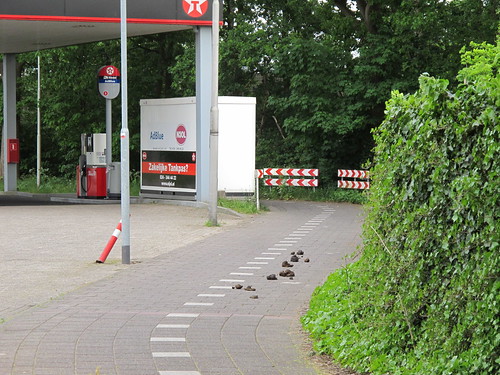
And here's a picture of the classic Dutch "round the back of the garage" arrangement (mustn't obstruct petrol sales now, must we?). Note the sharp blind curve it creates:
Horse critique

mercredi 26 juin 2013

Why I write comments (and where you can find them)

When I decided, in 2009, to re-establish an online presence after a couple of years off, I made a couple of decisions whose effects persist to this day. Firstly, I decided to play with being anonymous, and Julius Beezer was the character I invented to represent me on the internet.§ As does happen, this representation has now spilled over into real life: my modest translation and editing business is entitled "Cabinet Beezer," and I write this from my cabinet, a real place, for which I pay rent.
To pay the rent I accept translation and editing tasks that fit with my interests, but much of the time I find myself on what I call "general internet patrol": engaging with my longstanding interest in the medium of internet communication generally, and specifically free software and open access scholarly publishing. Although my degree was in medicine, and I practised for many years as a GP in east London, my translation activity has pulled my centre of interest into the humanities: languages, belles lettres, philosophy, and history. I consider myself fortunate that my interest in these subjects has developed in the age of the internet.

Outputs

Although I maintain several blogs in the spirit that rights that are not exercised are lost, and do indeed use them as a convenient place to publish a bit of text when the moment strikes,* I no longer primarily consider myself as a "blogger"; indeed, I find the term in contradiction with my longing for the overturn of Gramsci's observation that "all men are intellectuals but not all men have the public function of intellectuals." In other words, everyone should blog, when they feel like it, and hopefully that'll be helpful.
But what I really want to do is change peoples' minds. Whatever I write, I write primarily for the satisfaction of being able to reread it and say "Yep, that guy's nailed it. At least there's someone on the planet I totally agree with!" It struck me that one of the conventions of blogging—the replies function—is undervalued, and I decided to explore it as a participant-observer.  I've enjoyed reading reading blog comments since the early days of Slashdot, and the BMJ's rapid responses, back in the day when it was unpaywalled: there's a new kind of truth there that wasn't possible before. And new problems of course.
I found, when I looked recently, for example, that I have left 72k words at the Guardian's 'Comment is Free' site over the last four years.† But the Guardian is unsatisfying for several reasons, and now that I have a well-populated RSS stream, I prefer the roads less travelled away from the mainstream.
I collate this activity as a set of public bookmarks along the way, which enables a chronological listing of the comments as I left with them, using two tags dccomments and jbcomments. I also maintain a list of tagged bookmarks relating to the activity of commenting itself.
All this was just by way of diving in. But my theoretical knowledge is growing, and maybe one day I'll write something solid about commenting, and attention, and democracy, and the internet, but in the meantime, I'll just have to leave it to your imaginations and this lousy blogpost.
---
[update: 27/8/14] *Particularly, it must be noted, when a comment composed for another online venue is rejected. Examples: twitterblocking, cycle apartheid, France24 rejection, screening for terrorists, HuffPo atheists.]
[update: 30/11/15] §This conceit was formally abandoned on 28/06/14
[update: 22/01/16] †Fixed busted link to juliuzbeezer public profile at The Guardian's site. That word count is out of date now, though I effuse there much less frequently than I once did.